A border agreement
Argentina and Chile had been arguing over where their border ran through the Andes. In May 1902 they signed the Pactos de Mayo, and the definition of the boundary was left in the hands of the British Crown, which issued its ruling in November of that year.
The idea: an image of Christ up high
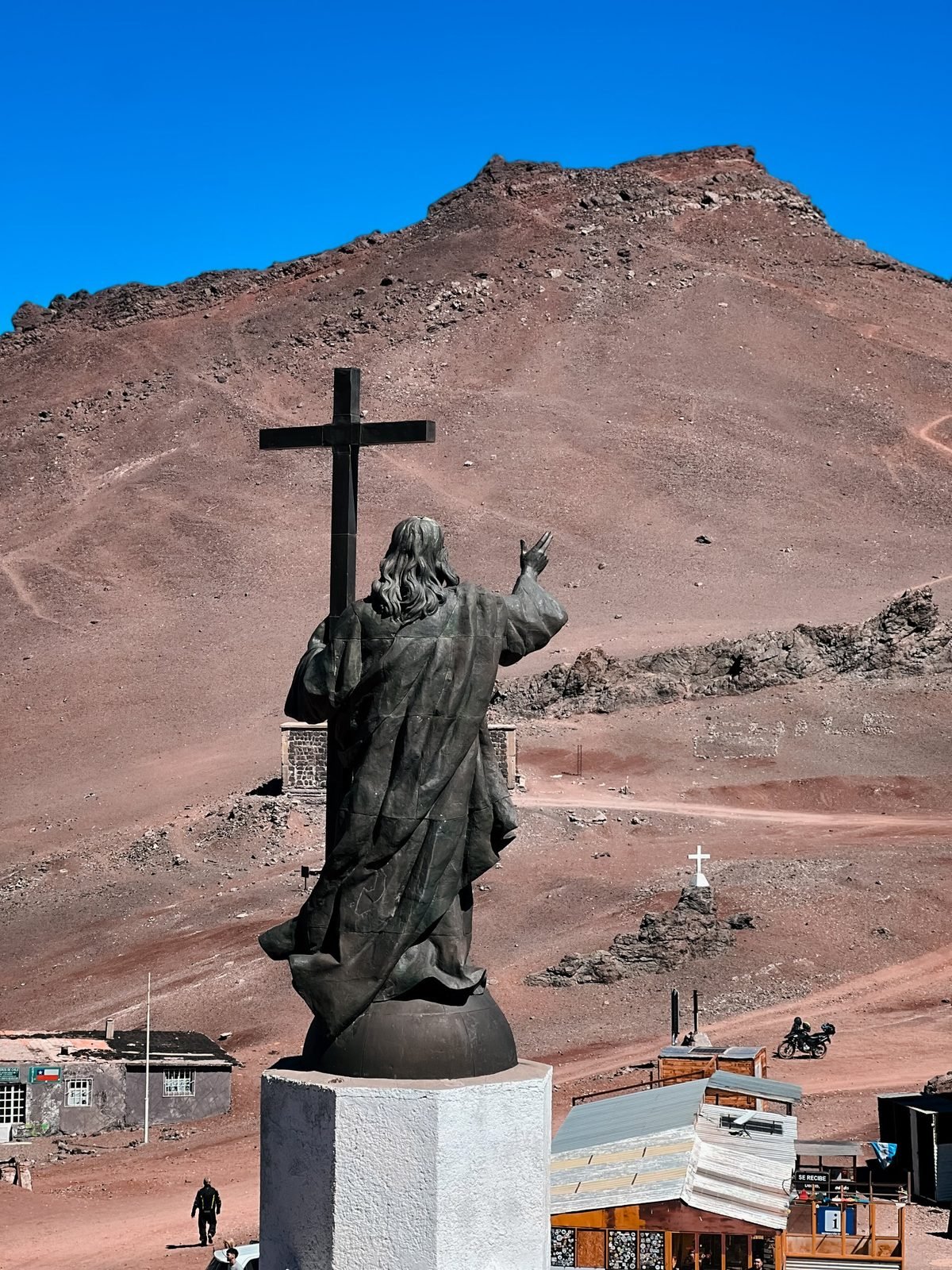
Ángela Oliveira Cézar de Costa proposed raising a large image of Christ in the mountains, right on the border, as a symbol of that agreement. The work was paid for through a public fundraising drive. The bronze pieces left Buenos Aires.
How the statue went up
The statue traveled in pieces. They went by train as far as the mountains, and the last stretch, up to the summit, was done on mule back. Sources give different figures for the distances, dimensions and weight of the work, so we don’t repeat them here.
The inscription
The monument was unveiled on March 13, 1904. The plaque carries a phrase in Latin: Ipse est pax nostra qui facit utraque unum, from the biblical text, which in free translation reads “He is our peace, who made the two peoples one.” An inscription in Spanish is also often quoted: “These mountains will crumble sooner than Argentines and Chileans break the peace sworn at the feet of Christ the Redeemer.”
Getting there by bike
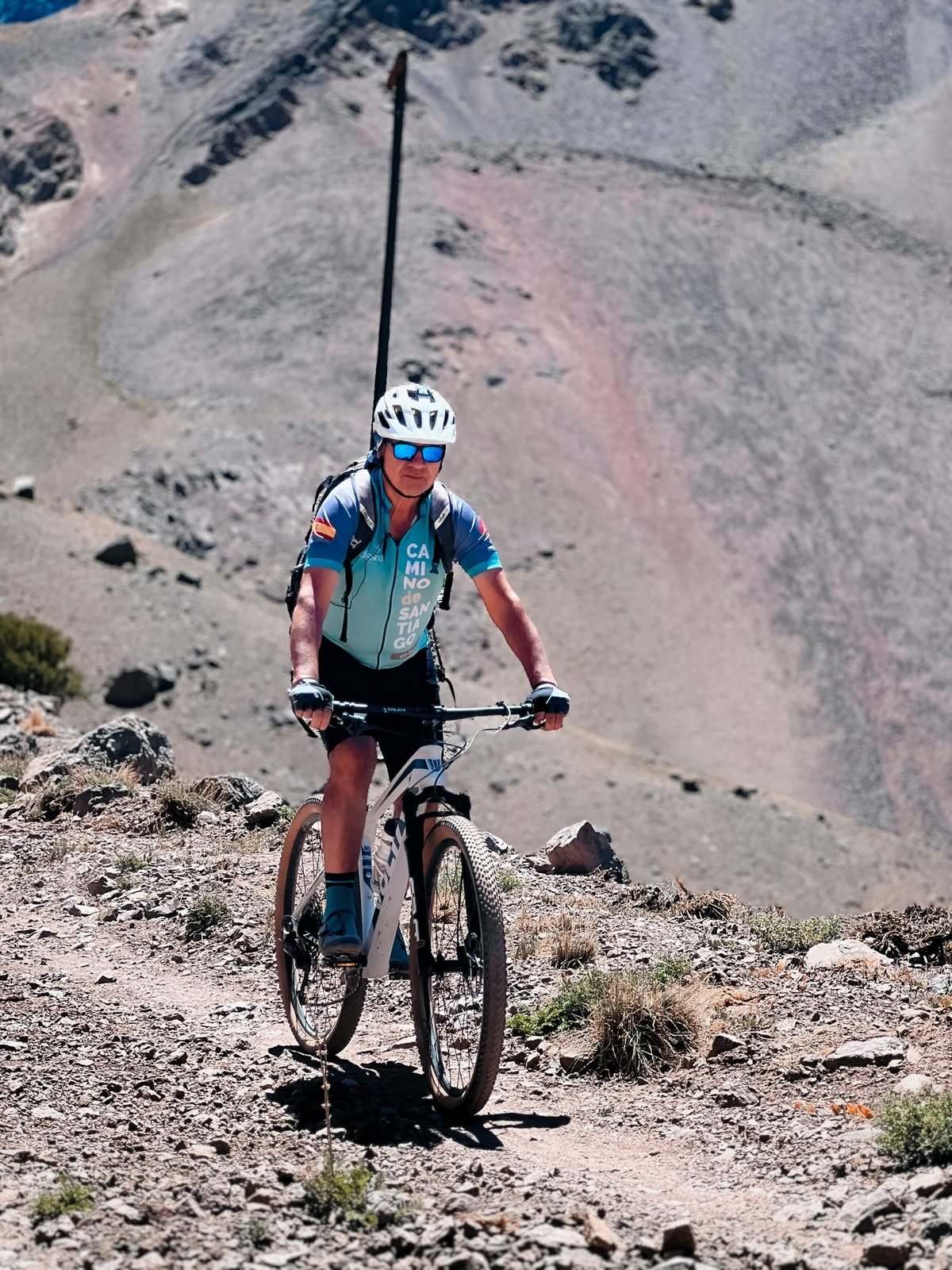
On the Andes Crossing the monument is day 6. Before that there are four days of riding and one of trekking, passing through Aconcagua Park and Puente del Inca. The day is organized like this:
The guides know the history of the road, and along the route there is time to stop and look. If altitude raises questions for you, we wrote a separate post on how we approach it.